
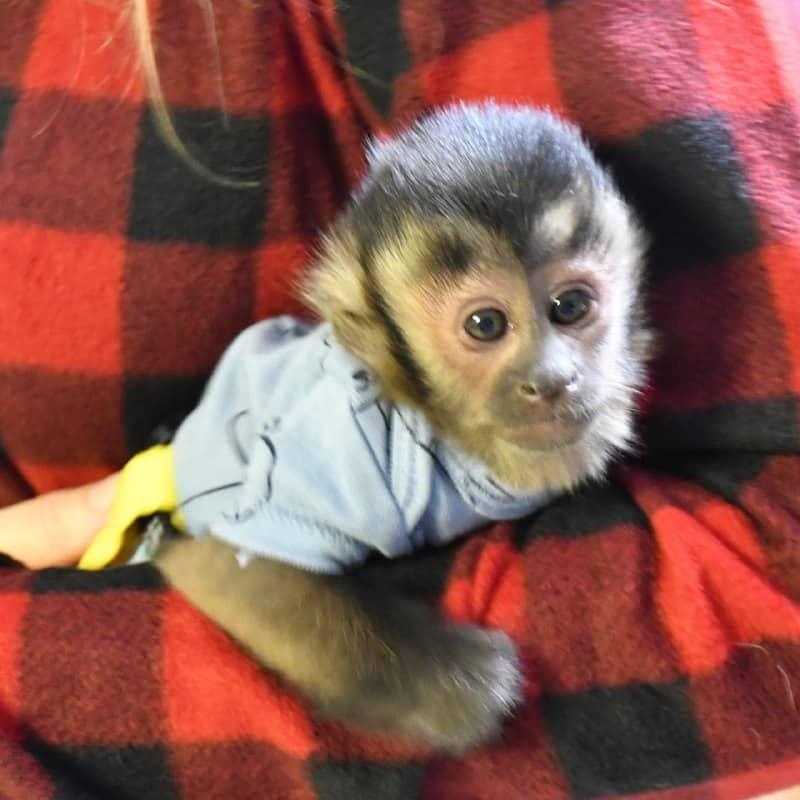
Capuchin Monkeys: The Big-Brained Primates
When it comes to intelligence in the animal kingdom, brain size matters—but not in the way most people think. While elephants and whales have massive brains, scientists have discovered that the ratio of brain size to body size often provides better insight into cognitive abilities. Among nonhuman primates, one group stands out with the most impressive brain-to-body ratio: capuchin monkeys. These small, charismatic New World primates punch far above their weight class when it comes to cognitive capabilities, and their remarkable brain development has made them subjects of fascination for researchers studying primate intelligence and evolution.
Understanding Brain-to-Body Ratio
Before diving into what makes capuchins so special, it’s important to understand what brain-to-body ratio means and why it matters. This measurement compares the mass of an animal’s brain to the mass of its entire body. Animals with higher ratios dedicate more of their biological resources to neural tissue, which typically correlates with enhanced cognitive abilities.
Humans have the highest brain-to-body ratio of any animal, which partially explains our advanced cognitive capabilities. However, among our primate cousins, capuchins claim the top spot for nonhuman primates. Despite weighing only 3-9 pounds depending on species, capuchins possess brains that are disproportionately large for their body size, giving them cognitive abilities that rival much larger primates.
The Capuchin Brain Advantage
Capuchin monkeys belong to the subfamily Cebinae and are native to Central and South America. There are several species, including the tufted capuchin, white-faced capuchin, and black-capped capuchin, among others. What unites them all is their impressive neural architecture packed into their small frames.
The capuchin brain weighs approximately 70-79 grams, which might seem modest compared to the 1,300-1,400 gram human brain or even the 400-gram brain of a chimpanzee. However, when you consider that an adult capuchin weighs only 3-9 pounds compared to a 120-pound chimpanzee or 150-pound human, the proportional investment in brain tissue becomes remarkable.
This high brain-to-body ratio translates into cognitive abilities that surprise researchers and challenge our assumptions about primate intelligence. Capuchins demonstrate problem-solving skills, tool use, social learning, and planning abilities that would be expected from much larger primates.
Intelligence in Action: What Capuchins Can Do
The cognitive capabilities of capuchins manifest in numerous impressive ways that have been documented both in the wild and in laboratory settings.
Tool Use and Manufacture
Capuchins are among the most accomplished tool users in the animal kingdom. Wild capuchins have been observed using stones as hammers and anvils to crack open hard nuts—a behavior that requires not only understanding cause and effect but also selecting appropriate tools and using them with precision. Some populations have been using stone tools for hundreds or even thousands of years, with archaeological evidence of capuchin tool use sites dating back centuries.
They’ve also been observed using sticks to extract insects from crevices, leaves as drinking vessels, and stones as weapons. Perhaps most impressively, capuchins can modify tools to make them more effective—a behavior once thought to be unique to great apes and humans.
Problem-Solving Abilities
In experimental settings, capuchins excel at puzzle-solving tasks. They can understand abstract concepts like “same versus different,” learn through observation, and apply learned solutions to novel problems. They’ve demonstrated the ability to plan ahead, delay gratification for better rewards, and even understand basic concepts of fairness and inequity—famously refusing to participate in experiments when they observe others receiving better rewards for the same task.
Social Intelligence
Like many primates, capuchins live in complex social groups with intricate hierarchies and relationships. Their social intelligence includes the ability to recognize individuals, remember past interactions, form coalitions, engage in reciprocal altruism, and even display behaviors that suggest they understand others’ mental states—a cognitive ability known as theory of mind.
They communicate through a sophisticated system of vocalizations, facial expressions, and body language. Their social learning abilities are so advanced that different capuchin groups develop distinct cultural traditions, particularly regarding tool use and foraging techniques.
Memory and Learning
Capuchins possess excellent spatial memory and can remember the locations of hundreds of fruit trees across their territory, tracking which trees produce fruit at different times of year. This requires complex mental mapping and temporal understanding. They also show impressive long-term memory for social relationships and past events, remembering individuals and interactions over extended periods.
Why Did Capuchins Evolve Such Large Brains?
The evolutionary pressures that led to capuchins’ impressive brain development remain a subject of scientific investigation, but several factors likely contributed.
Dietary Challenges
Capuchins have an omnivorous diet that includes fruits, nuts, insects, small vertebrates, and other foods that require different extraction techniques. Processing hard nuts with stone tools, finding hidden insects, and tracking seasonal fruit availability all demand significant cognitive investment. The “expensive tissue hypothesis” suggests that high-quality, difficult-to-obtain diets can drive brain evolution.
Social Complexity
Living in groups with 10-40 individuals creates cognitive demands. Tracking relationships, remembering past interactions, forming alliances, and navigating social hierarchies all require substantial neural processing power. The “social brain hypothesis” proposes that managing complex social relationships has been a major driver of primate brain evolution.
Environmental Variability
Capuchins inhabit diverse environments from rainforests to dry forests, requiring behavioral flexibility and adaptability. Larger brains facilitate learning and innovation, allowing capuchins to exploit new food sources and adapt to changing conditions.
Implications for Understanding Intelligence
The capuchin example challenges simplistic notions about intelligence and brain size. While absolute brain size matters, the capuchin’s success demonstrates that efficiency and organization of neural tissue can be equally important. Their cognitive abilities rival those of much larger primates, suggesting that brain structure and connectivity patterns may be as crucial as raw size.
Research on capuchin intelligence also provides insights into the evolution of human cognition. By studying which cognitive abilities emerge in different primate lineages, scientists can better understand which aspects of human intelligence are uniquely human and which represent shared primate heritage.
Conservation and Ethical Considerations
Understanding capuchin intelligence has important implications for conservation and animal welfare. Their cognitive sophistication means they experience complex emotions, form meaningful relationships, and suffer when those relationships are disrupted. This knowledge strengthens arguments for protecting capuchin habitat and ending their use in entertainment or as pets.
Many capuchin species face threats from habitat loss, hunting, and the illegal pet trade. Their intelligence makes them appealing as pets, but their complex needs make them wholly unsuitable for captivity outside professional settings.
Conclusion
Capuchin monkeys stand as remarkable examples of how evolution can pack extraordinary cognitive power into small packages. Their impressive brain-to-body ratio—the highest among nonhuman primates—enables problem-solving abilities, tool use, and social intelligence that rival much larger primates. As we continue studying these fascinating creatures, we gain not only appreciation for their capabilities but also deeper understanding of intelligence itself and the diverse paths evolution can take in developing cognitive abilities. The capuchin brain reminds us that when it comes to intelligence, it’s not just about size—it’s about how efficiently that neural real estate is organized and utilized.